

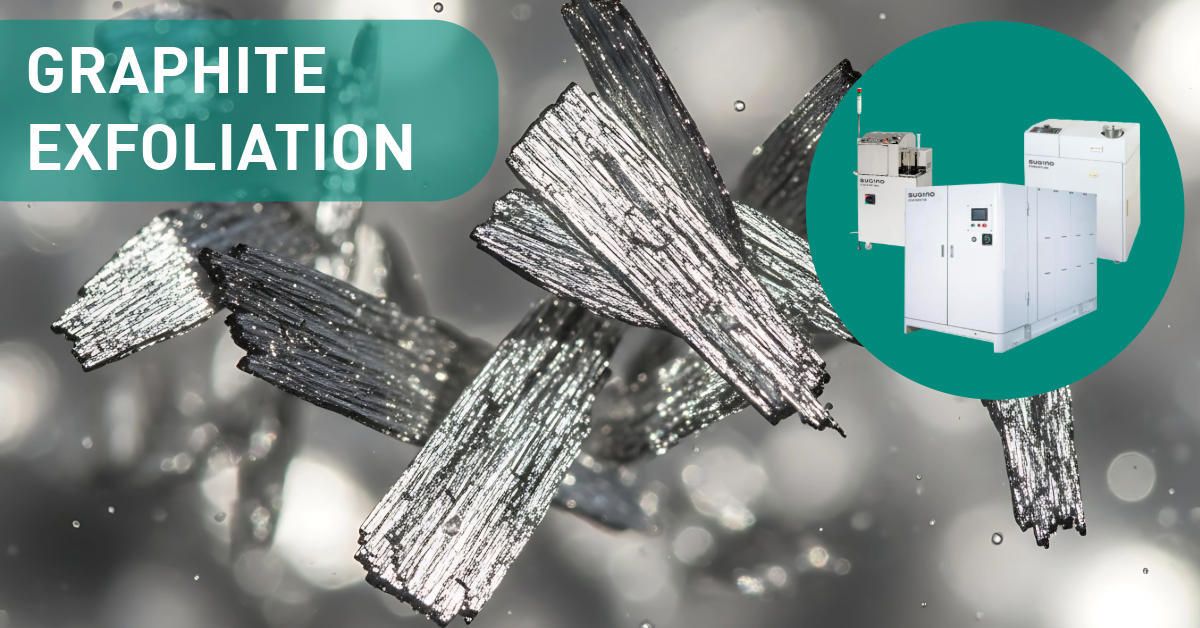
Graphite Exfoliation with Wet Jet Milling
By Andrea Campbell
Prepared by Keisuke Yoneda, Applications Engineer, Sugino Corp.
What is Graphite exfoliation and why does it matter?
Graphite is a key material in many consumer and industrial products. Graphite exfoliation is the process of separating bulk graphite into thin, high-aspect-ratio layers, often just a few nanometers thick. Exfoliating graphite unlocks dramatic improvements to electrical conductivity, thermal performance, and mechanical strength. When done at high solid concentrations, it enables commercially scalable production of graphene-like materials for batteries, electronics, and industrial lubricants.
These magnified properties enable higher battery output and energy density, improved heat dissipation in electronics, and reduced wear in industrial components.
Using Star Burst, high–solid–content graphite suspensions (over 30 wt%) can be efficiently exfoliated in water, organic solvents, or oils. This wet-jet milling technology combines collision, cavitation, and high shear forces to control the exfoliation process precisely. By adjusting chamber design or operating pressure, the aspect ratio can be fine-tuned to meet specific application requirements.
This approach not only unlocks the full potential of graphite but also delivers significant productivity gains for material developers and manufacturers.
Watch Now: How Star Burst Works
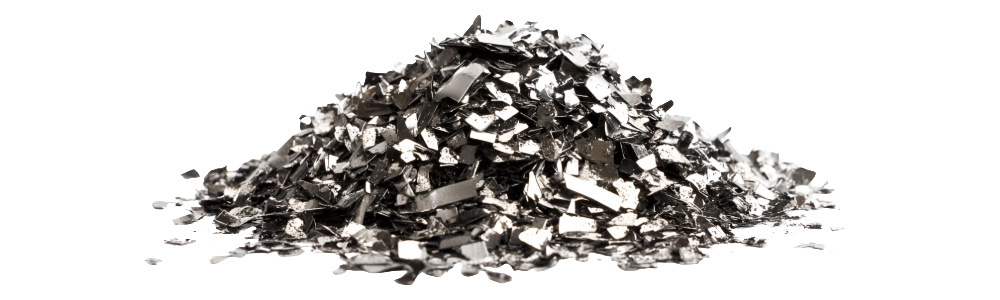
Before and After: Particle Size Distribution and SEM Image of Star Burst Processing of Graphite
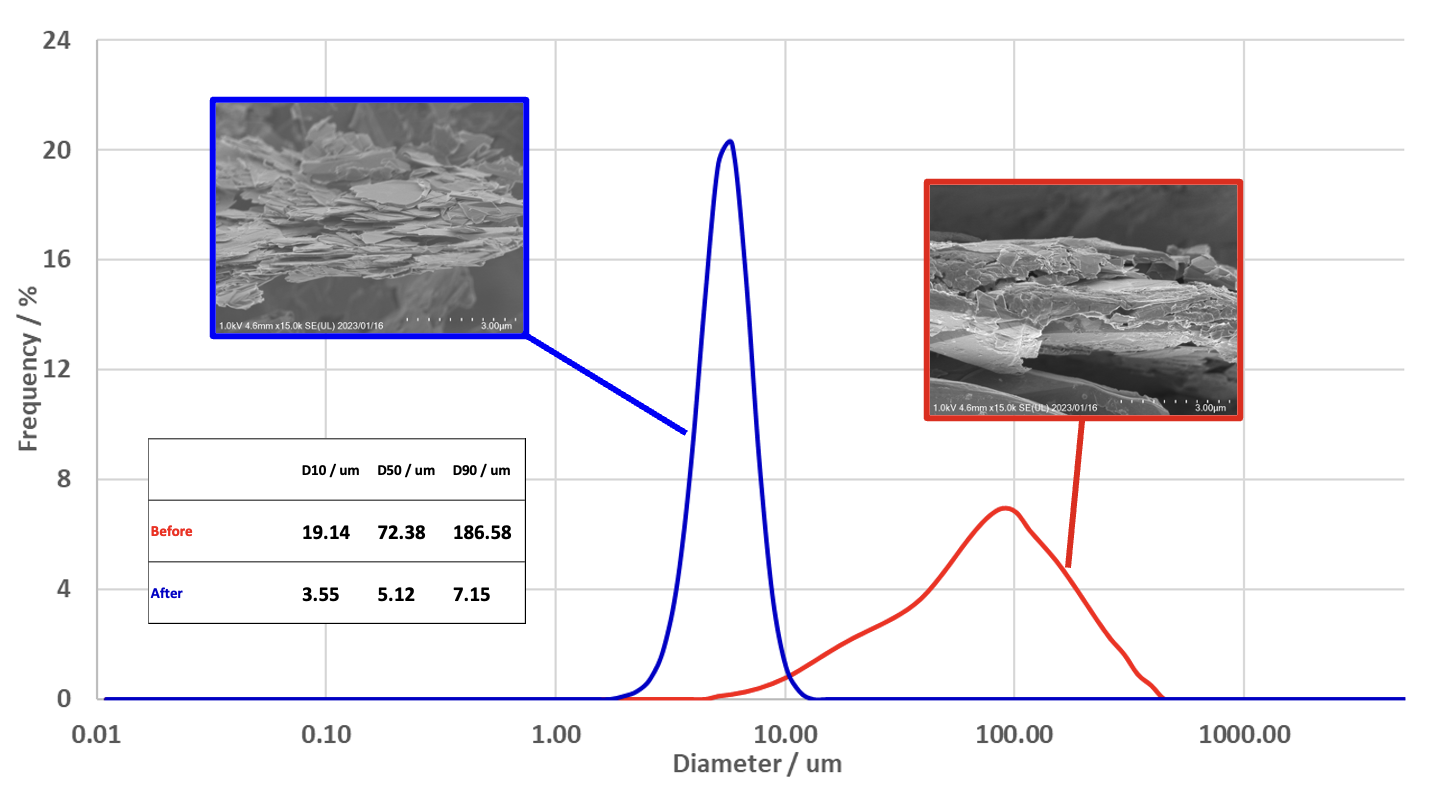
Particle size distribution before and after Star Burst wet jet milling of graphite at 30+ wt% solid concentration. Median particle diameter (D50) reduced from 72.38 µm to 5.12 µm, with D90 dropping from 186.58 µm to 7.15 µm. SEM images confirm successful exfoliation into thin, high-aspect-ratio graphene layers.
While this example focuses on Graphite, Star Burst equipment is ideal for for a wide range of materials. Its flexibility and efficiency make it a powerful tool for developing advanced materials.
Learn how Star Burst compares to other common processing methods: Star Burst Comparison
- Significantly improves electrical and thermal conductivity, lubricity, and strength
- High Solid Loading = Real production relevance: Many exfoliation methods struggle at high concentrations
- Ability to adjust chamber design and operating pressure means more control to dial in the final result
Scalable process with flexibility (can use water, organic solvents, oils) - makes integration into existing systems easier
Key results:


