

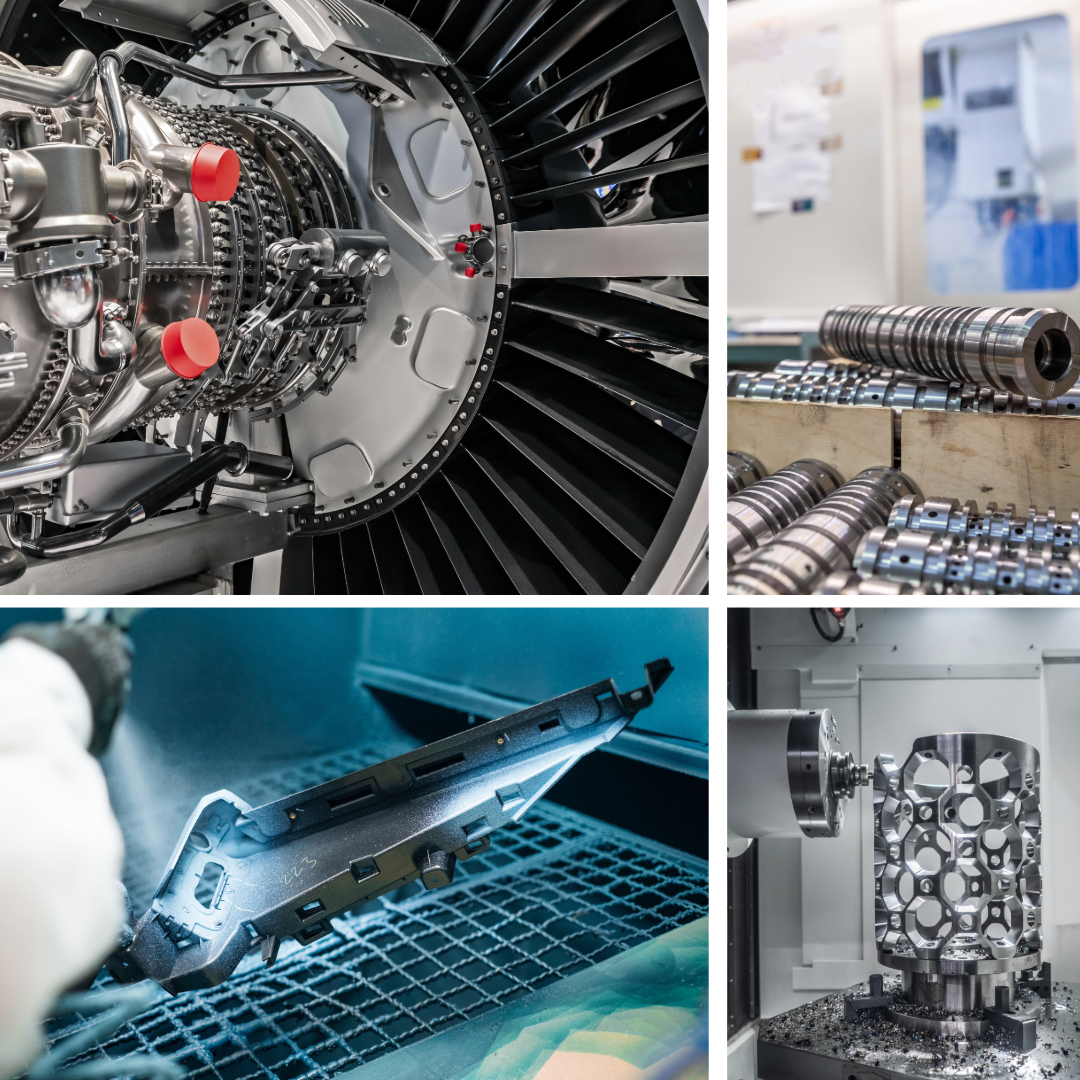
Aerospace machining has a burr problem that most deburring equipment was never designed to solve. Structural brackets, manifolds, and monolithic airframe components frequently include cross-drilled holes, stepped bores, and compound-angle surfaces that can be difficult to access with conventional deburring methods.
That's exactly the problem Sugino built the JCC 104 4+1 to solve.
The Compound Angle Problem in Aerospace Parts
Aerospace components are dense with geometry that exists for weight savings and structural performance, not for ease of manufacturing. Cross-drilled lubrication passages, angled mounting bosses, stepped bearing bores, and intersecting internal channels are common on structural and hydraulic parts. As a result, every one of those features generates burrs at the intersection points, and those intersections rarely line up with a simple X, Y, or Z approach.
These geometries present several challenges for conventional deburring processes:
- Manual tools and brushes require direct line of sight and physical access, which compound-angle internal features simply don't offer.
- Fixed-axis deburring machines can address maybe two or three sides of a part in a single setup, requiring multiple fixturing operations and creating multiple opportunities for missed burrs or handling damage.
- Abrasive or mechanical methods can round over precision edges or leave media embedded in a part, which is a non-starter in aerospace, where FOD (foreign object debris) contamination during and after machining is a serious quality and safety concern.
In flight-critical aerospace components, burrs left in angled cross-holes can affect fluid flow, create localized stress points, or introduce contamination risks that technicians must resolve before assembly.
How 4+1 Axis Motion Improves Access to Complex Features
The "4+1" in the JCC 104 4+1’s name refers to its indexing control: a rotary axis setup that, combined with the machine's linear travel, delivers true 5-axis positioning. At the center of the system is a newly developed hollow, 2-axis tilting rotary table with an open bottom.
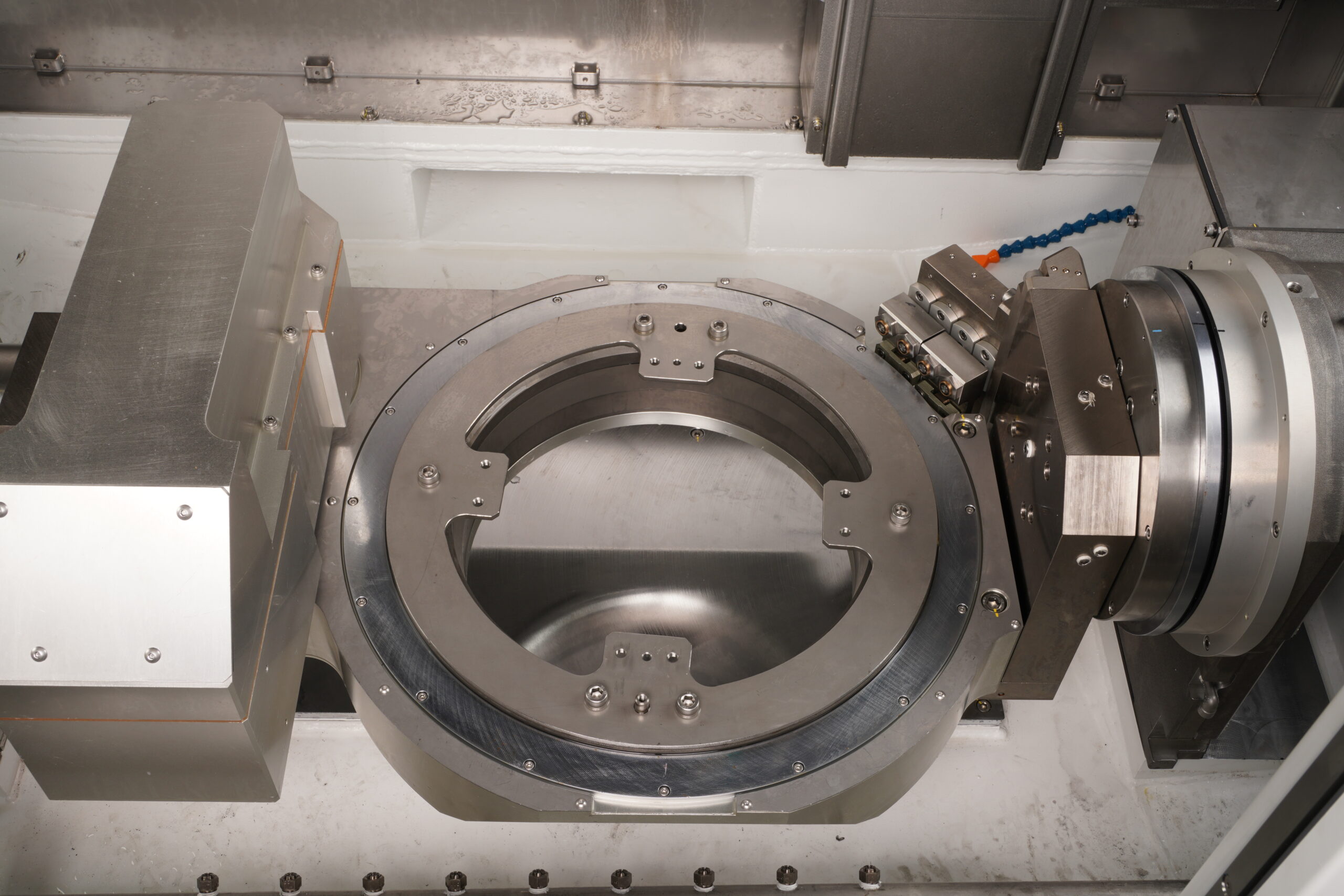
The open-bottom table design provides greater access to multi-sided and compound-angle features during processing. Because the table can tilt and rotate the part while keeping the bottom surface clear, the JCC 104 can present every face of a workpiece, including the mounting surface a fixture would normally trap, to the waterjet nozzle. In practice, this means a part with features on six different planes, at odd angles relative to one another, can be deburred in a single setup rather than repositioning and re-fixturing the part for each face.
For aerospace parts with angled cross-drilled features or complex internal geometries, processing in a single setup can reduce handling, improve repeatability, and minimize fixturing-related variation. It removes the repeated handling and re-referencing that introduces variation, and it means the nozzle can travel along a true compound-angle path to meet a burr exactly where it forms, rather than approaching it obliquely from the nearest available axis.
Deburring with High-Pressure Water
The JCC 104 Hybrid pairs 5-axis motion with high-pressure waterjet deburring, running up to 50 MPa at flow rates up to 29 L/min. Here's why that matters: Because the medium is a directed water jet rather than a mechanical tool or abrasive brush, it can reach into features that no rigid tool could physically enter: cross holes, deep holes, blind holes, tapped holes, and stepped bores.
For aerospace components with complex internal features, this approach provides two practical advantages:
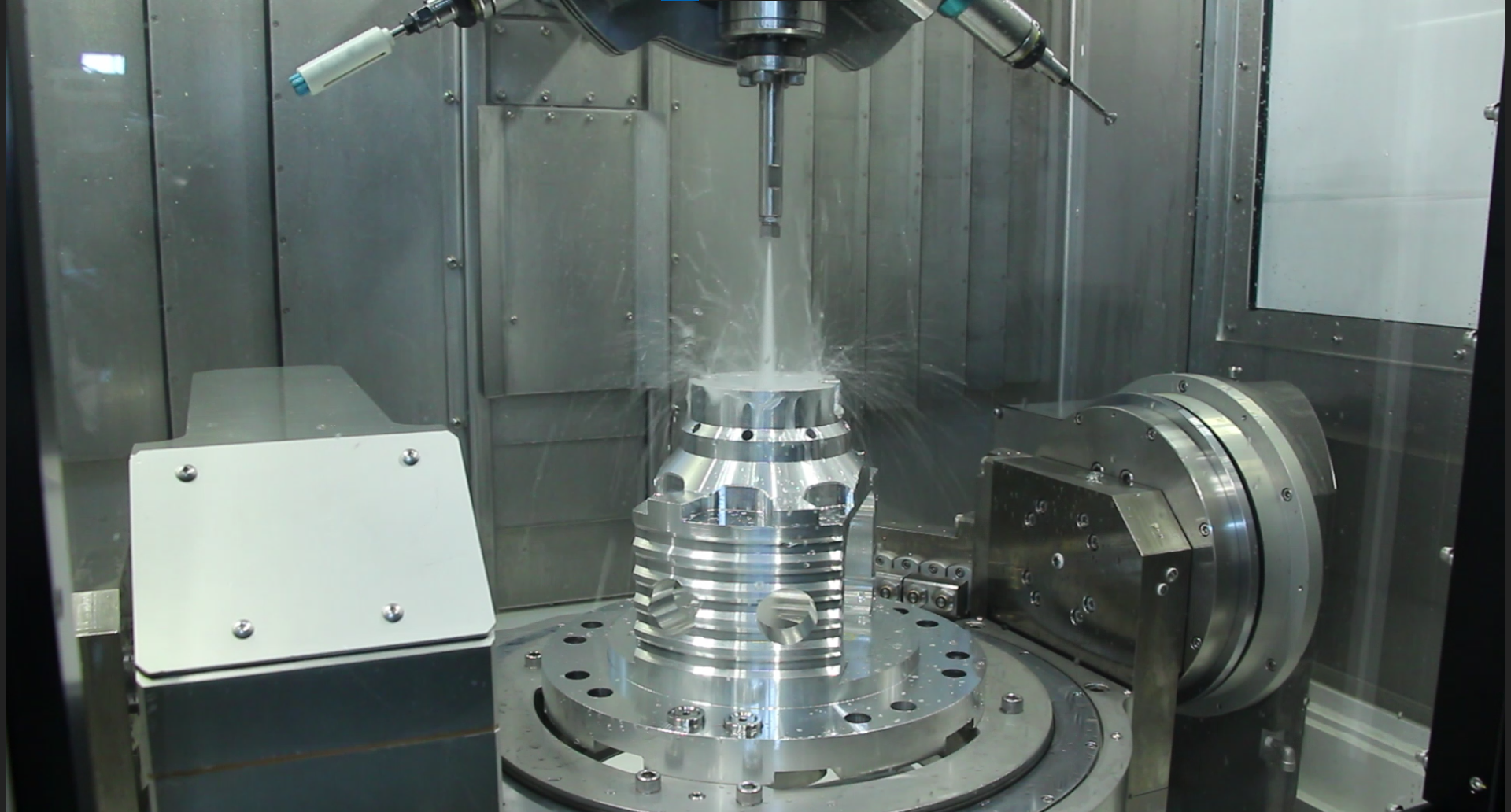
- The jet reaches where tools can't. A waterjet doesn't need clearance for a tool’s body or shank, only a path for the stream itself, which makes it far more forgiving of tight, angled internal geometry.
- Deburring and cleaning happen in the same pass. The same high-pressure water that dislodges burrs also flushes chips and residue out of the feature, consolidating what would otherwise be separate deburring and cleaning operations into a single step.
On parts with multiple intersecting features, combining deburring and cleaning into a single operation can reduce processing steps and improve process consistency.
Built for Production, Not Just Capability
Production performance depends not only on capability, but also on repeatability, throughput, and ease of integration into existing manufacturing workflows. The JCC 104 is CNC-controlled using standard G-code, which means it fits into existing shop workflows and skill sets rather than requiring a specialized operator certification.
Additionally, it ships standard with Sugino's JCC-eSmart energy-saving package, which optimizes the high-pressure pump, the single largest power draw in a parts washer, to meaningfully reduce energy consumption during continuous operation. The JCC-eSmart package can reduce annual power consumption by approximately 63% in high-volume operating environments.
The Bottom Line
Compound-angle features present some of the most difficult deburring challenges in aerospace manufacturing not because the burrs are unusually stubborn, but because the tooling simply can't get there. The JCC 104 4+1 addresses that gap directly: 5-axis indexing motion and an open-bottom tilting rotary table put every surface of a part, including angled internal features, within reach of a high-pressure waterjet, all in a single setup.
For aerospace manufacturers dealing with structural brackets, manifolds, and other parts where burrs hide at odd angles within intersecting features, that combination of accessibility, process consolidation, and repeatable positioning helps manufacturers achieve more consistent deburring results while reducing handling and secondary operations.
Manufacturers considering automated deburring for complex aerospace components can send sample parts to Sugino's Wixom Technology Center for testing and see how the process performs on their specific applications.
More to Explore
High-Pressure Water Jet Deburring & Cleaning FAQ
Questions about how high-pressure water jet works? Explore answers to common questions with this FAQ guide.
Read More >
Making the Most of the Parts Testing Process
Before parts are tested and a report is created, good communication and clear expectations can help make the parts testing process as effective as possible.
Read More >

Parts Testing with JCC Water Jet Deburring
With comprehensive parts testing at our Technology Center, you can find out how high-pressure water jet deburring will work on your real-world parts.
Read More >
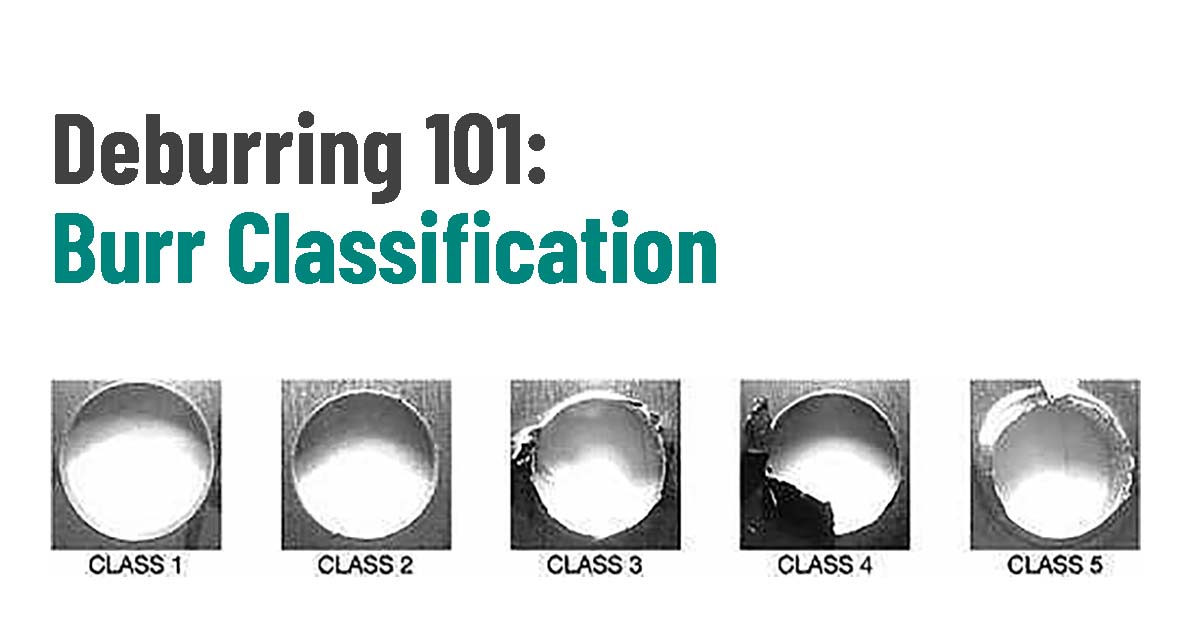
Classification of Burrs
What kind of burrs are a good fit for Jet Clean Center (JCC) water jet deburring? Learn how to classify burrs with this guide.
Read More >
More Posts


